Projects

Three major research directions linking PTEN/PI3K–AKT–mTOR signaling to neuronal development, synaptic plasticity, circuit function, and disease.

The Impact of PTEN Signaling on Neuronal Form and Function

PTEN mutations are linked to autism spectrum disorder (ASD) and macrocephaly, and PTEN loss in mouse models drives excessive neuronal growth, increased synaptogenesis, and heightened excitability. We study how PTEN constrains PI3K signaling to preserve activity-dependent regulation of dendritic growth and synapse formation during development. Using intersectional mouse genetics and viral targeting of newborn neurons in vivo, coupled with imaging and whole-cell electrophysiology, we define signaling intermediates (mTORC1/mTORC2, AKT isoforms) and cytoskeletal mechanisms that govern dendritic elaboration, synapse formation, and neuronal function.
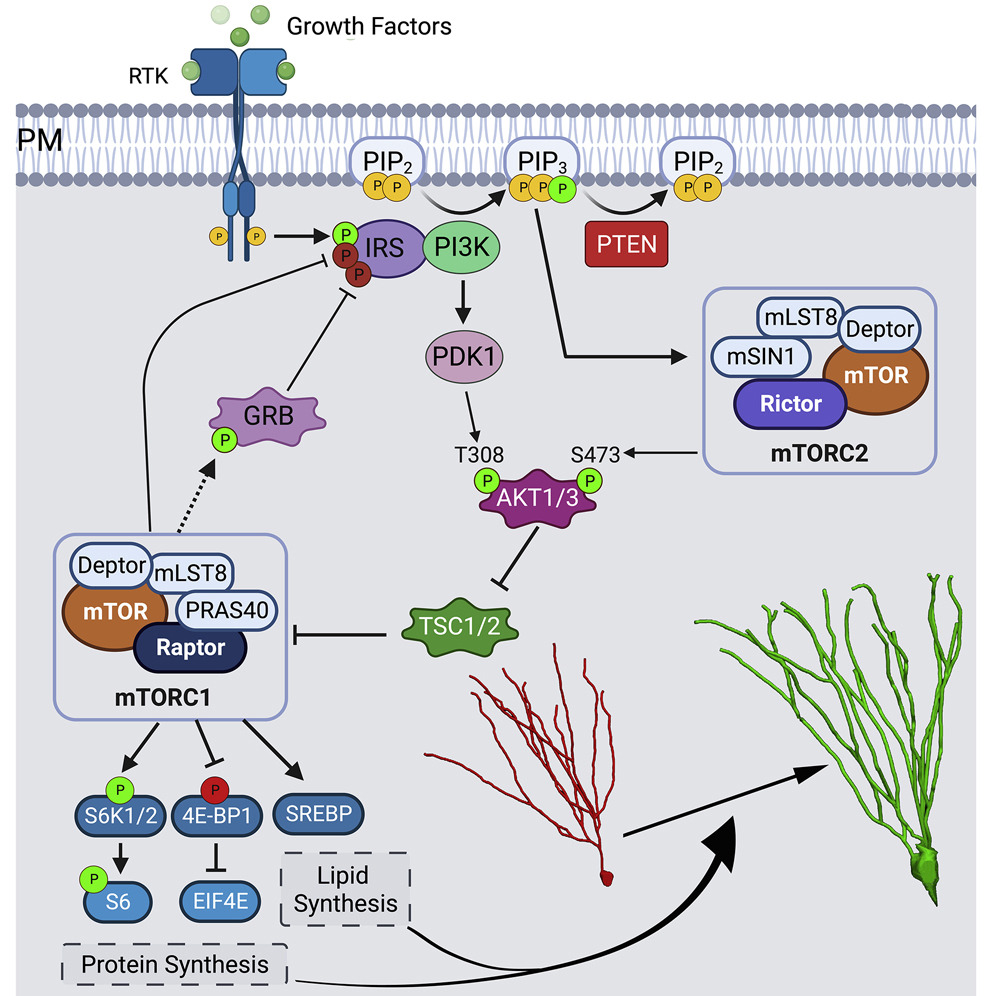
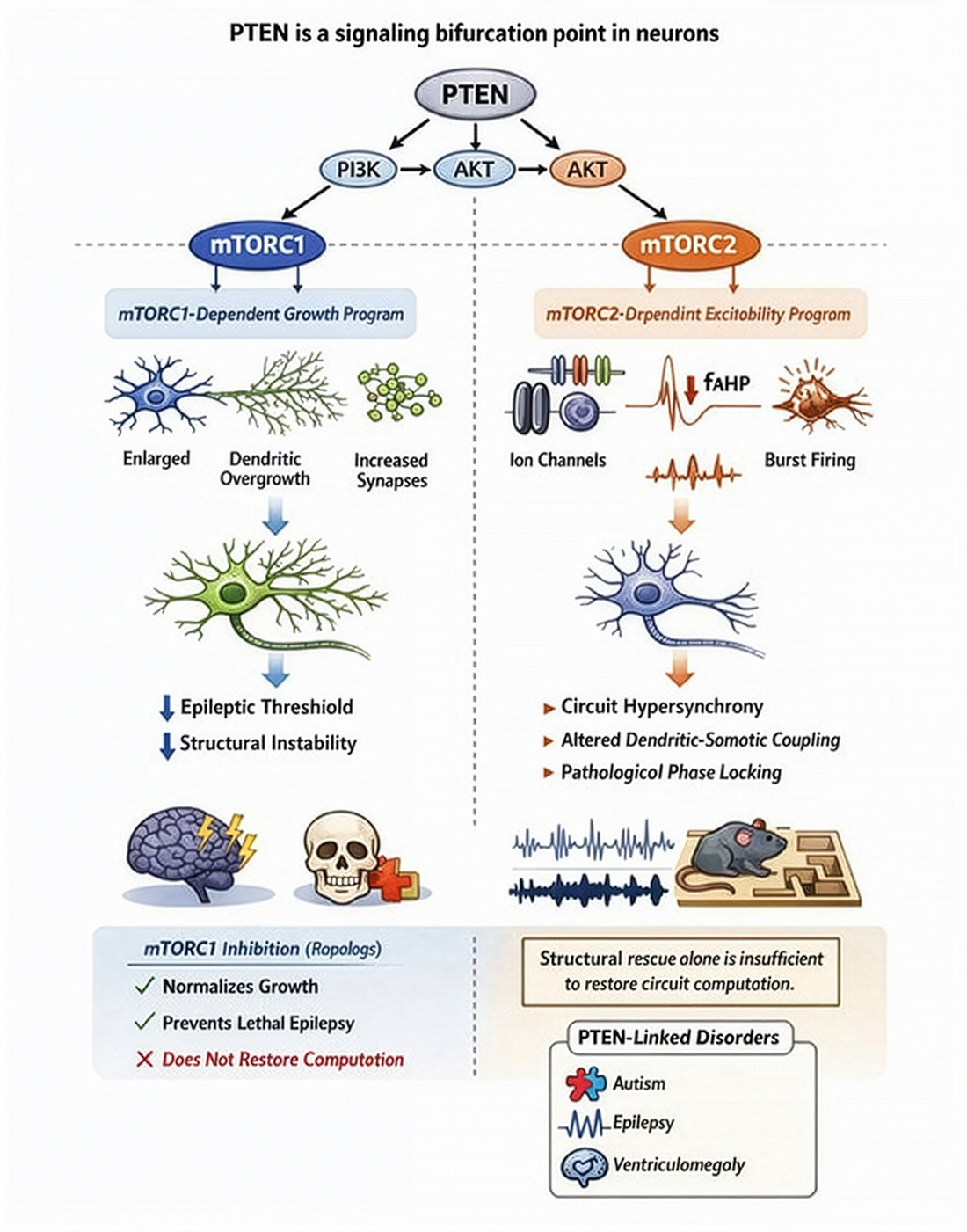
Project 1: PTEN signaling and neuronal form and function

The Role of PTEN in Neuronal Circuit Development and Function

Collaboration with Co-Is Jeremy Barry and Matthew Weston.

PTEN is one of the most frequently implicated genes in ASD, yet how PTEN-dependent cellular phenotypes translate into network dysfunction and behavior remains unclear. This project tests how PTEN loss in dentate granule neurons alters entorhinal–hippocampal information flow, network dynamics, and cognition. We combine targeted genetic manipulations (restricted retroviral knockout versus widespread knockout) with in vivo electrophysiology and behavioral assays to link single-cell abnormalities to circuit-level coding. By selectively rescuing growth/synapse phenotypes versus excitability/burst firing (e.g., via mTORC1/mTORC2 pathway manipulations), we aim to identify which mechanisms drive ASD-relevant cognitive deficits and epilepsy-associated hypersynchrony.

Project 2: PTEN and neuronal circuit development and function

Role of PTEN at the CSF–Brain Interface: Implications for Hydrocephalus and Autism

Collaboration with Kristopher Kahle, Matthew Weston, Baojian Fan, Xin Yu, and Alice Zhou (MGH).

Ventriculomegaly is a common feature of congenital hydrocephalus (CH) and an underrecognized concomitant of ASD. Recent human genetics indicates that PTEN loss-of-function variants are among the most frequent monogenic causes of treated CH and primary ventriculomegaly, often with ASD/developmental comorbidity. This project uses newly developed PTEN-mutant mouse models that recapitulate the ventriculomegalic spectrum to define how PTEN mutations concurrently disrupt CSF dynamics and cortical network function. We combine advanced MRI and direct assays of CSF production/flow with circuit-level physiology and neurobehavioral profiling, and we test pharmaco-genetic mTOR pathway inhibition (including FDA-approved and CNS-optimized inhibitors) as a strategy to treat both hydrocephalus and associated neural circuit pathology.

Project 3: PTEN at the CSF–brain interface